Flooding can have a significant impact on your home, business, livestock and land. Planning ahead for a flood is important as it helps you prepare and know exactly what to do if a flood occurs, saving valuable time, reducing the impact and making the recovery process easier. This blog will outline some of the simple steps you can take to ensure you are as prepared as possible.
How to plan ahead for flooding: a guide for farmers and landowners
As a landowner, there is a good possibility that you could be a riparian owner. A riparian owner is somebody who has a watercourse running beneath, through or adjacent to the boundary of their land. If a watercourse forms a boundary with your land, you will usually own up to the centre of the river’s channel. Whilst riparian owners do not need to proactively carry out action to reduce the risk of flooding, some of the things that they are responsible for are:
-
- Letting water flow naturally.
- Carrying out basic maintenance on the section of watercourse that you own (permission will be required for more extensive work).
- Reporting incidents such as flooding, blockages which could cause flooding and unusual changes in flow, etc.
We have written lots of information on riparian ownership and the responsibilities that they have for The Flood Hub website, which can be found by clicking here.
Flood events are becoming more frequent and simple steps can really help your farming business be as prepared as possible. These are detailed below.
Find out whether you’re at risk of flooding
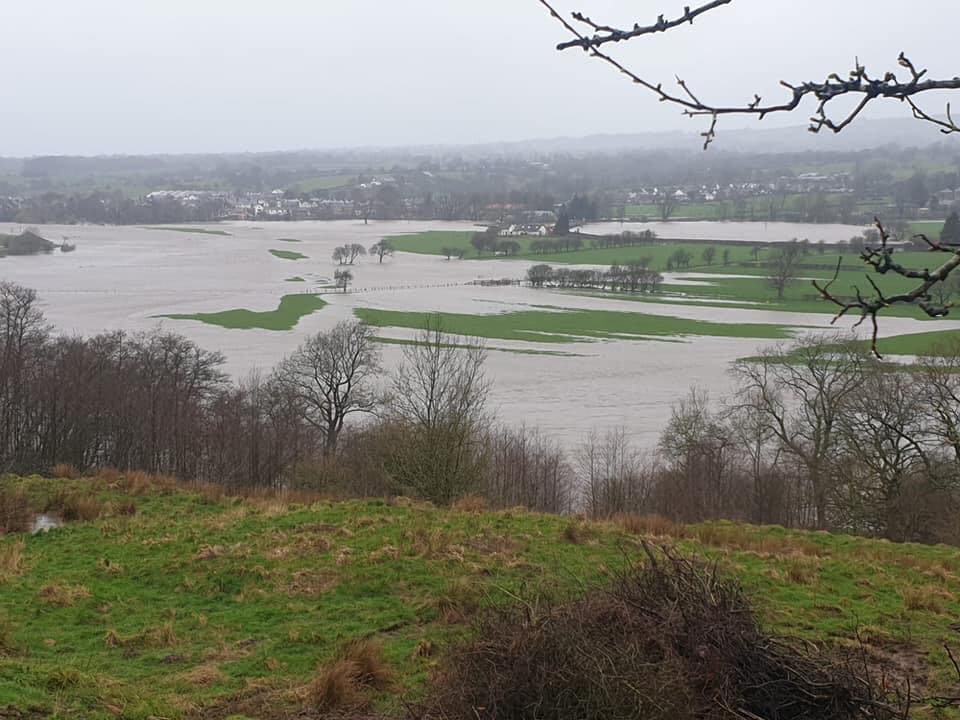
A good starting point to becoming more prepared for and resilient to future flooding, is to check your flood risk. The Environment Agency’s flood risk maps can show you the type of flooding your farm and surrounding land and outbuildings may be at risk from and the level of risk that they’re at. If they span multiple postcodes, it’s important to check the flood risk for each individual area. Links to the Environment Agency’s Flood Risk Maps can be found on The Flood Hub’s ‘Am I at Risk?’ page by clicking here.
Sign up for flood alerts and flood warnings or have an alternative trigger for your flood plan
The Environment Agency’s Flood Warning Service is free of charge and can send flood alerts and warnings to you, your household members and employees via call, text or email if your farm is located in an area at risk of flooding. It’s important to be aware that the service covers areas at risk of flooding from main rivers and the sea. We have written more information about flood warnings on The Flood Hub here.
If your farm or land is not covered by the Environment Agency’s Flood Warning service, there are alternative ways to receive warnings for flooding and bad weather which can act as a trigger for your flood plan. We have written a wealth of information on The Flood Hub here about the alternative triggers which are available.
Create a flood plan
When a flood alert or warning is issued, having a flood plan can speed up your response time and allow you to prepare effectively in advance of a flood. It outlines the specific steps to take to protect your property, farm outbuildings, livestock, machinery etc. If you employ staff to help run the farm, it is also important to ensure that they, as well as you know what to do should a flood alert or warning be issued or a flood occur. It is always a good idea to carry out flood drills to test the plan during drier periods and to review it at least annually to ensure all the relevant information is included within it.
Having a flood plan checklist, a step-by-step action plan shared with family and employees, a list of important contact details and having your important documents in one central location are all important things to consider when creating your flood plan. However, as a landowner and/or farmer, it’s essential to think about the following too:
-
- The location of your livestock – are they in an area at risk of flooding? Is there a suitable alternative parcel of land on your farm in which you could place them which is out of flood risk in the event of a flood?
- Ensuring that pesticides, fertilisers and other chemicals and fuels are stored appropriately and safely out of flood risk.
- Whether bales of hay, haylage and silage, as well as forage are appropriately stacked and stored to minimise the risk of them being in contact with floodwater.
- Any property flood resilience measures (PFR) which could be applied to buildings which are at risk of flooding. We have written a lot of information and guidance on PFR for The Flood Hub which you can read about by clicking here.
- Whether your agricultural vehicles, machinery or veterinary products are located in areas at risk.
- Getting in touch with neighbouring farmers and landowners, or emergency contacts, to share copies of your flood plan and create a community network. By doing this, you may all be able to work together in the event of a flood and utilise any different land skills you all could have.
More information on this can be found by clicking here: https://ahdb.org.uk/knowledge-library/advice-for-livestock-farmers-affected-by-flooding.
For The Flood Hub, we created a ‘Flood Plan for Landowners and Farmers’ flood plan template which you can print off and use as your own flood plan. You can also find a blank flood plan which you can fill in yourself to make it specific to you. You can download it by clicking here. Our guide which we wrote for The Flood Hub also provides more information on the things you should consider as part of your flood plan: https://thefloodhub.co.uk/wp-content/uploads/2023/12/FT-Q-R19-Flood-Planning-and-Flood-Recovery-Advice-for-Farmers-and-Landowners-A-Short-Guide.pdf.
Have adequate flood insurance
If your farm, outbuildings and/or land are situated in areas at risk of flooding, it’s important to ensure that you are insured against flooding for both your buildings and contents, and that you aren’t under insured.
Whilst the farm buildings will not be covered by Flood Re, the farmhouse may be eligible and it would be worth checking with your insurers to see if is. We have written lots of information on insurance for households, as well as the Flood Re Scheme for The Flood Hub which can be found here. We have also produced information and resources on insurance for businesses, which can be found here.
Having the correct level of cover is especially important for agricultural equipment or machinery which would be costly to replace. Your contents insurance should cover the full cost of replacing items with new equivalents, rather than their value at the time of the flood.
Prepare a flood kit
Having a fully stocked flood kit is extremely useful to have if you live or work in a rural area which is at risk of flooding or, at risk of becoming cut off if a neighbouring area floods. A flood kit ensures all your essential items are all in one, easily accessible place and preparing one ahead of a flood will save valuable time if you need to evacuate or if you become cut off from the wider area. Having one prepared will allow you to focus on other steps in your flood plan. Examples of some of the items that you could put in your flood kit include:
-
- A copy of your flood plan
- A map of the farm including all of your land and the location of livestock, outbuildings, agricultural machinery and hazardous chemicals.
- Contact number for your vet
- Farm documentation such as the County Parish Holding (CPH) number, animal passports and records
- Insurance policy documents
- Food for pets
- Animal feed
- Torches
- Staff contact list (if applicable)
- First aid kit
- Spare keys to farm, gates and outbuildings
- Wellingtons and warm and waterproof clothing
- Money
- Food and bottled water
- Medication
- Mobile phone power bank
More examples of what you could put in your flood kit can be found in the ‘Flood Planning and Flood Recovery Advice for Farmers and Landowners: A Short Guide’ booklet that we wrote for The Flood Hub here.
Reporting animal movements
When planning ahead, it’s important to note which of your livestock could be located in areas that are at risk from becoming inundated with floodwater, or becoming cut off. If a flood is expected and if it’s safe to do so, livestock should be moved to an area that is not at risk, such as on higher land. Or, if a neighbouring farm is located away from the risk of flooding, could they temporarily be moved there? It’s important to remember that if you are moving animals to a completely new holding, the movement must be reported as soon as possible after moving them to a safe location. You must record the date that the cattle have moved on or off their holding in a holding register and cattle passports. If you are only moving your cattle to a different holding on your farm/land, this does not need to be reported. This is also the case for sheep, goats and pig keepers.
More information on the recording and reporting of cattle can be found here: https://www.gov.uk/guidance/report-and-record-cattle-movements.
For more information on reporting animal movements in extreme weather, visit https://www.gov.uk/guidance/extreme-weather-guidance-for-farmers-and-land-managers.
More information on planning ahead for a flood, as well as flood recovery can be found in our booklet which we wrote for The Flood Hub website. Please click the following link to download it: